

Judging committee

Sunand Prasad OBE PPRIBA
Programme director, European Healthcare Design; Principal, Perkins&Will, UK
Sunand Prasad OBE PPRIBA
Programme director, European Healthcare Design; Principal, Perkins&Will, UK
Sunand Prasad is a principal at Perkins&Will. While designing across several sectors, he has been consistently engaged in healthcare and sustainability for four decades. At the core of his architectural practice, alongside interdisciplinary collaboration, Sunand holds a passionate belief that expertise and aesthetic judgement are most effective in creating truly successful environments when they are catalysed by the everyday experience of people.
Sunand has been active in the wider built environment industry, particularly championing low-carbon, regenerative design, and until recently, as chair of the UK Green Building Council. He was President of the Royal Institute of British Architects (RIBA) from 2007 to 2009, campaigning for action on climate change. He was founding member of the UK Government’s Commission for Architecture and the Built Environment; a London Mayor’s design advocate; a trustee of the Centre for Cities; and Chair of the trustees of Article 25, the humanitarian architecture charity. He currently chairs the Editorial Board of the Journal of Architecture and the External Advisory Board of TRUUD, a major research project on the fundamental links between health and urban development. He has written widely on architecture, sustainability and healthcare design, such as the book 'Changing Hospital Architecture'.
Ben Cave
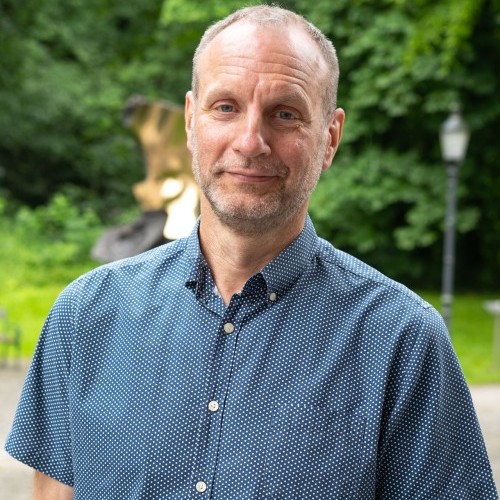
Director, Ben Cave Associates; University of Groningen, UK
Ben Cave is a board chair and infrastructure specialist with over 20 years’ experience advising governments, multilateral institutions, financial organisations and the private sector on health, regulatory and environmental risk in major projects. He was elected, and then served as, President of the International Association for Impact Assessment. He is an Honorary Professor at the University of Liverpool and is completing a PhD across the faculties of spatial sciences and law at the University of Groningen.

Louise Ciotti
Programme lead for architecture M-Arch, University of the West of England, UK
Louise Ciotti is Programme Lead for Architecture M-Arch at the University of the West of England, (UWE Bristol). An experienced academic and practitioner, she aims to equip students with the skills, attributes and knowledge to create sustainable, inclusive futures and the agency to make positive change in the natural and built environments. She is a Fellow of the Schumacher Institute for Sustainable systems and a Senior Fellow of the Higher Education Academy. She is an advocate for an inclusive and diverse curriculum that reflects the individual backgrounds, experiences and interests of learners, working as co-leader of the UWE School of Architecture and Environment ‘Athena Swan’ team. She is part of a team delivering ‘live’ project based teaching, involving students in a series of meaningful, collaborative activities with practitioners and the wider community.
Her research work has predominantly responded to prevailing industry needs in the advancement of sustainable design and construction. As in-house practice Researcher she delivered UK and European funded research projects into innovative materiality, embodied carbon profiling and climate change adaptation. She is completing a D Phil that brings together a series of publications on retrofit drivers and decision making, the health impacts of retrofit, and the role of agency in implementing retrofit in low income communities.
She combines research and teaching with professional architectural practice, with 20 years practice experience in southwest UK. As a Registered Conservation Architect with the AABC, and a PAS 2035 Retrofit Designer, she currently co-runs a specialist retrofit-focused practice with expertise in low carbon adaptive reuse, historic building repair and retrofit; and community resilience.

Lourdes Madigasekera-Elliott
Public health strategic lead, Creating Healthy Places, East Sussex County Council, UK
Lourdes is a public health professional who leads on creating healthy and sustainable places in East Sussex for East Sussex County Council. Lourdes has a background in international development, programme management, sustainability, political science, and sociology which includes a Masters in African Studies from Oxford University. In England, she co-chairs both the national health in all policies network and the southeast regional healthy places (built and natural environment) network. Lourdes and her team work to embed ‘Health in All Policies’ and lead on ‘Creating Healthy Places’ from a public health perspective. Using a ‘whole systems approach’, Lourdes works to influence decisions made in sectors other than ‘health’ that can positively or negatively affect the wider determinants of health and health inequalities. This includes a specialist focus on ‘planning for health/designing in health’ and planetary health. Lourdes provides expertise on health impact assessments and national strategic infrastructure projects.
Andy Miah
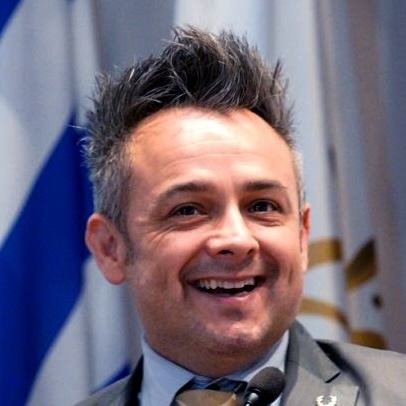
Chair of science communication and future media, University of Salford, UK
Professor Andy Miah, PhD is chair of science communication and future media at the University of Salford, where he is also the academic champion for the Ethics of Artificial Intelligence. Professor Miah also provides research leadership for the Innovate UK funded MediaCity Immersive Technologies Innovation Hub. His research investigates the ethical, legal, social and cultural questions concerning technological change and his publications draw on ideas from science, technology, art, and media culture.
Author of ten books and more than 200 academic articles, Professor Miah has been at the forefront of debates about how humanity is moving beyond conventional evolutionary processes and towards evolution by technology. His research on the Olympic Games has involved advising cities for over 25 years on their regeneration goals and how to integrate healthy living into mega-events. He holds advisory roles for the UK Government’s Department of Culture, Media and Sport, the World Technology Games, the Global Esports Federation, and the British Esports Federation. His recent works have focused on artificial intelligence, esports, digital health, and the metaverse. He regularly interviews for a range of major media companies and has appeared in more than 300 outlets, including Audible, Fortune, Vogue, BBC, and The Conversation.
Beatrice Fraenkel
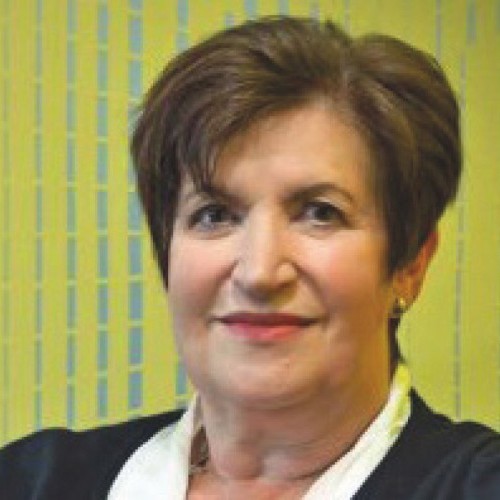
Design regeneration and health consultant; Trustee, Design Council, UK
Beatrice is an industrial designer and ergonomist with particular expertise in designing systems and products aligned to end user requirements. Her early career was in design, ergonomic research and teaching at UMIST and Liverpool University. Her public-sector life has always involved regeneration and economic development schemes at a local and regional level – first as chair of the Rope Walks Partnership in Liverpool, then as chair of Renew NW. Beatrice was a non-executive director of Liverpool Health Authority, then chair of South Liverpool Primary Care Trust. Beatrice is a CQC special advisor specialising in governance and leadership. She is a trustee of the Design Council and an Hon.FRIBA. Her past roles have included chair of a housing association, trustee of Tate Liverpool, and chair of the Architects Registration Board.

Prof Jeremy Myerson
Academic director and co-founder, Healthy City Design; Professor emeritus, Helen Hamlyn Centre for Design, Royal College of Art, UK
Jeremy Myerson has been academic, author and activist in design for more than 40 years. He co-founded the Helen Hamlyn Centre for Design in 1999, and was its director until 2015. Last year, he received emeritus professor status at the RCA, and he continues to direct his own venture, the WORKTECH Academy, which provides a forum for academics and practitioners to share new ideas on the future of work and workplace. He is the author of more than 20 books on a wide range of subjects in art, design and architecture, and he has curated many national design exhibitions. He has been at the helm of the Healthy City Design Programme Committee since the Congress’ inception in 2017.
Helen Pineo
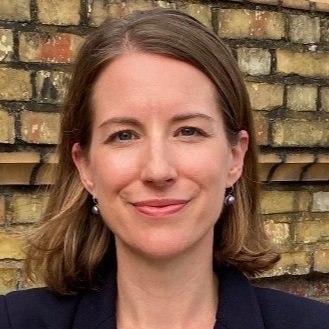
Urban planner and research associate professor, University of Washington, United States
Helen Pineo is an urban planner, Research Associate Professor in the Department of Urban Design and Planning at the University of Washington and Honorary Associate Professor at University College London. Her research focuses on how development, regeneration and urban policy can support health and sustainability. She contributes to the evidence base about why and how to do healthy urbanism by using transdisciplinary approaches and amplifying the needs of under-represented communities and the planet.